Start with the job decision
Oilfield Wastewater Treatment System projects succeed when the equipment scope is tied to a defined operating duty: conditioning produced water and flowback for reuse, reinjection or project-specific discharge requirements. A useful project document separates normal duty, maximum credible duty, standby or transient conditions and the physical interfaces available at site. This keeps procurement language connected to field reality.
Record water chemistry, oil and grease concentration, total dissolved solids and reuse or discharge target as ranges rather than isolated peak figures. The supplier can then explain how the hydrocyclone or primary separator, dissolved-gas flotation, fine filtration and optional membrane or polishing stage work together across the intended envelope.
Translate the environment into equipment requirements
Do not rely only on a general ambient-temperature statement. Specify minimum startup temperature, normal and solar-exposed operating temperature, altitude, humidity, dust, wind, precipitation, icing, salt exposure and storage duration. Identify whether the unit must start after a cold soak or remain energized between jobs.
For this Oilfield Wastewater Treatment System, validate the environmental package while performing produced-water recycling, fracturing-flowback treatment, reinjection preparation and zero-liquid-discharge pretreatment. Review the hydrocyclone or primary separator, dissolved-gas flotation, fine filtration and optional membrane or polishing stage as one operating system because a climate adaptation can change startup time, available capacity or service access elsewhere.
| Review item | What to confirm | Evidence or input |
|---|---|---|
| Cold climate | Heating, insulation, fluid selection and drainability | Cold-soak startup case |
| Hot and dusty site | Cooling margin, filtration and enclosure ventilation | Maximum ambient and dust loading |
| High altitude | Engine, fan, burner or cooling derating | Site elevation and atmospheric data |
| Remote operation | Fuel, water, consumables, spares and communications | Logistics and autonomy plan |
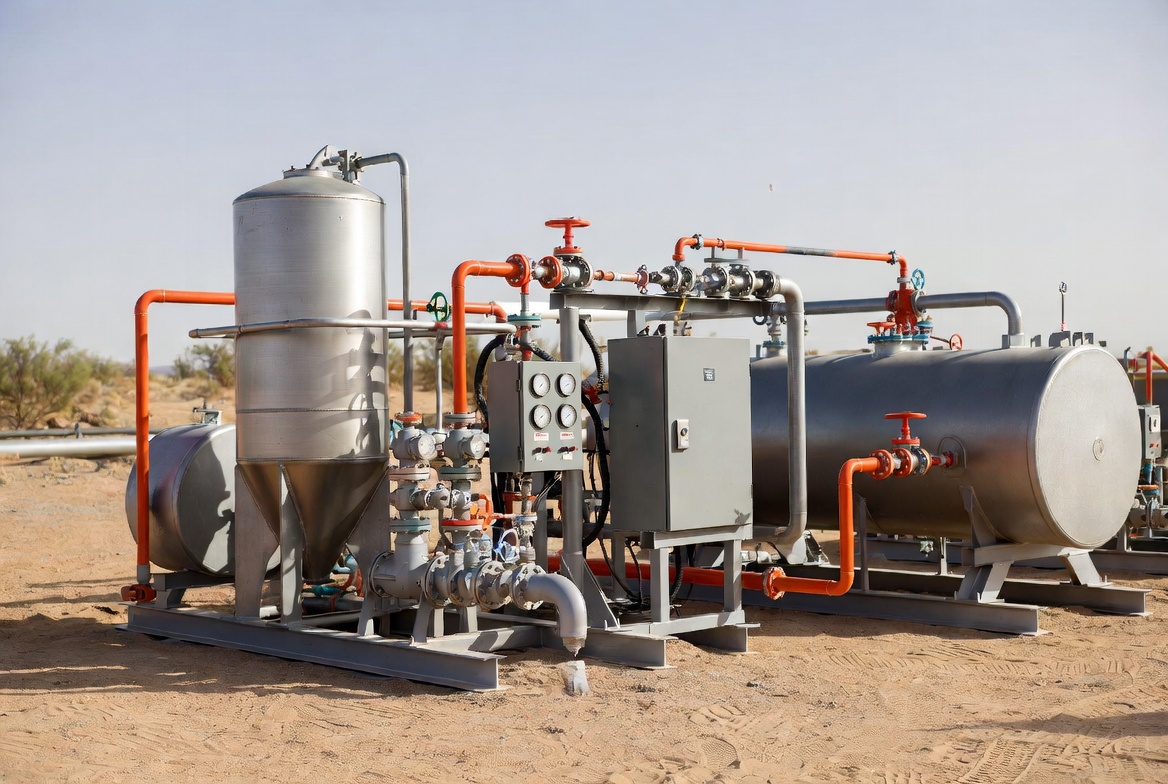
Cold-weather and hot-climate packages affect multiple systems
For low temperatures, review heaters, insulation, heat tracing, battery capacity, lubricant grades, elastomers, drains and sheltered operator access. For heat and altitude, confirm derating of engines, motors, cooling systems and combustion equipment. Dust and sand require attention to air filtration, enclosure pressure and cleaning access.
Remote-field readiness is an autonomy question
Estimate fuel, water and consumable demand for the planned job window. Define onboard storage, replenishment method, critical spares, diagnostic data and communications. The package should fail to a safe state and provide enough information for local technicians and remote support to identify the affected subsystem.
Use the applicable project standards
Environmental adaptations do not replace the project safety basis. Review the package against U.S. EPA oil and gas extraction effluent guidelines and the codes specified by the owner or jurisdiction.
Keep a usable project record
Maintain one controlled file containing the approved duty sheet, supplier clarifications, drawings, component data, inspection records, test results, deviations, photographs and signed acceptance documents. Record document revisions and the person responsible for each open item. This prevents the operating team from receiving a package whose final configuration differs from the information used during procurement.
The handover set should also identify installed component models, consumables, calibration intervals, recommended spares, preservation requirements and supplier support contacts. Capture baseline operating readings when the unit is accepted. Those records give maintenance personnel a reference for condition changes and allow later modifications to be reviewed against the original design basis.
Before closing the project, confirm that operators can find the startup, normal-operation, controlled-shutdown and emergency procedures relevant to their unit. Training attendance alone is not sufficient; the responsible team should demonstrate the required checks and know which conditions require escalation rather than continued operation.
Codes, standards and project requirements
Confirm the final specification and acceptance plan against the owner’s project standards, local jurisdiction and U.S. EPA oil and gas extraction effluent guidelines. The applicable project documents govern whenever they are more specific.